Fraud losses stabilize, but AI-driven threats are eroding trust – research

Javelin Strategy & Research published the 23rd edition of its Identity Fraud Study, titled “The Illusion of Progress,”, finding that while identity fraud losses have stabilized and scam losses have declined, new account fraud surged, and growing consumer distrust fueled in part by AI is reshaping the fraud landscape.
„The combined impact of identity fraud and scams totaled $38 billion in 2025, down $9 billion from 2024. The combined number of victims decreased by 4 million, affecting 36 million victims in 2025. However, this apparent improvement does not necessarily indicate a reduction in overall risk. Identity fraud losses (excluding scams) remained relatively flat at $27.3 billion in 2025, compared to $27.2 billion in 2024, suggesting that stability in reported losses may mask shifts in fraud activity.” – according to the press release.
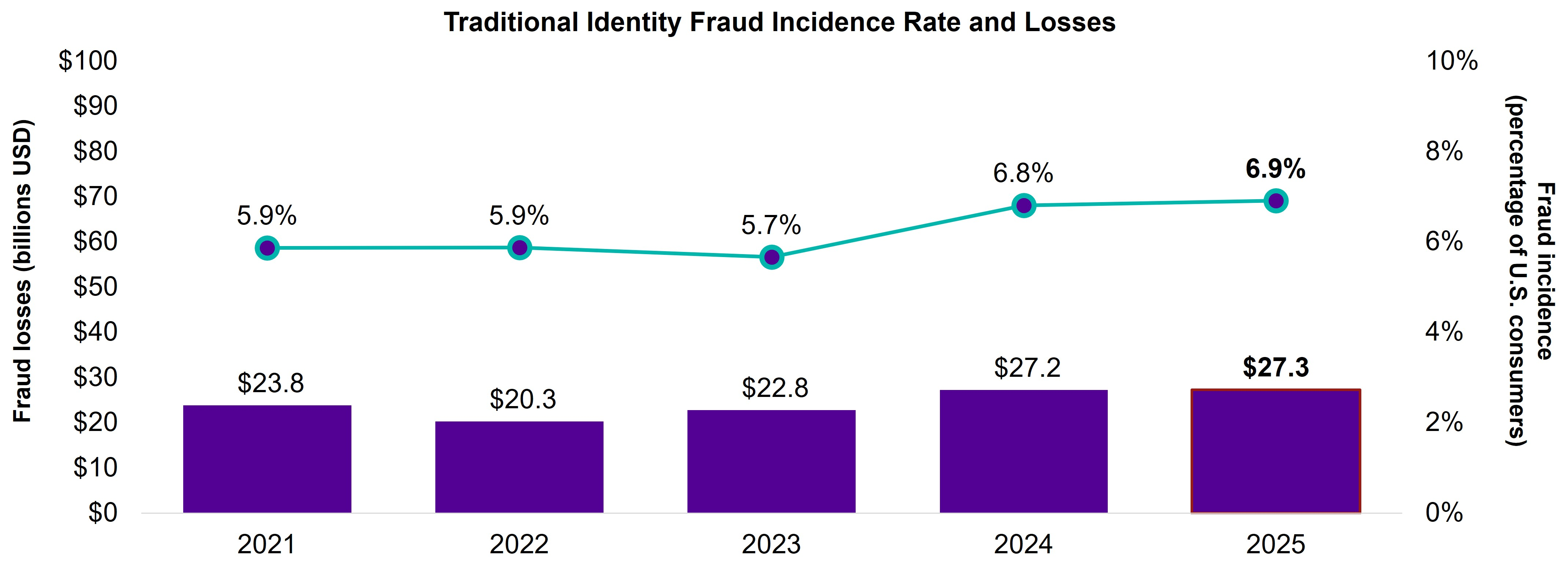
The disconnect is even more pronounced in scam activity, where losses fell 45% year over year, from $19.5 billion in 2024 to $10.7 billion in 2025. The decline is driven in part by a rise in scams that do not result in immediate monetary loss but can still lead to future fraud or account compromise. Suzanne Sando, Lead Analyst in Javelin’s Fraud Management practice and the report’s author, said it remains unclear whether overall risk is truly decreasing.
“Reduced losses do not mean reduced risk,” Sando said. “A 45% drop may look like progress, but scammers are increasingly stealing information instead of money, setting up future fraud that doesn’t show up in today’s loss figures.”
While overall fraud losses held steady, new account fraud stood out as the only category to see an increase in losses in 2025, with both losses and victim counts rising. It impacted 5.4 million victims, a 31% rise from 2024, while losses grew 13% year over year to $7 billion. This trend reflects a shift in how fraud is affecting consumers, driven by insufficient identity verification, automated bot attacks, and efforts to reduce friction during onboarding.
Scams are also shaping consumer behavior. Bank imposter scams rose sharply between 2024 and 2025, contributing to growing distrust in financial communications. As a result, consumers are increasingly questioning whether messages from their financial institutions are legitimate, with many choosing not to respond to fraud alerts. Among those who received an alert but did not respond, 55% believed it was a scam. Consumer trust in financial communications is declining as scams become more sophisticated.
Artificial intelligence, particularly generative AI, is accelerating these trends by making fraudulent communications more convincing and harder to detect. Financial institutions are investing in AI and autonomous technologies to improve fraud detection, while fraudsters are using the same tools to expand their reach with more efficient and scalable schemes. Sando noted that to address the growing misuse of AI, financial organizations must update fraud controls, enhance collaboration, and move beyond one-time checks toward continuous monitoring.
Key stats:
. The combined impact of identity fraud and scams totaled $38 billion in 2025, down $9 billion from 2024, affecting 36 million victims, down 4 million from 2024.
. Identity fraud resulted in $27.3 billion in losses affecting 18 million victims, while scams accounted for $10.7 billion in losses affecting 18 million victims.
. Account takeover losses decreased by 4% in 2025 but remained the costliest fraud type, exceeding $15 billion. Despite lower losses, account takeover affected 6 million consumers, an 18% increase from 2024.
. Romance scams, including pig butchering schemes, declined 41% year over year among victim-identified scam types.
. 30% of scam victims reported providing scammers with their banking details, such as account numbers or PINs.
Published annually since 2003, the study is the nation’s longest-running analysis of identity fraud, based on insights from more than 115,000 consumers.

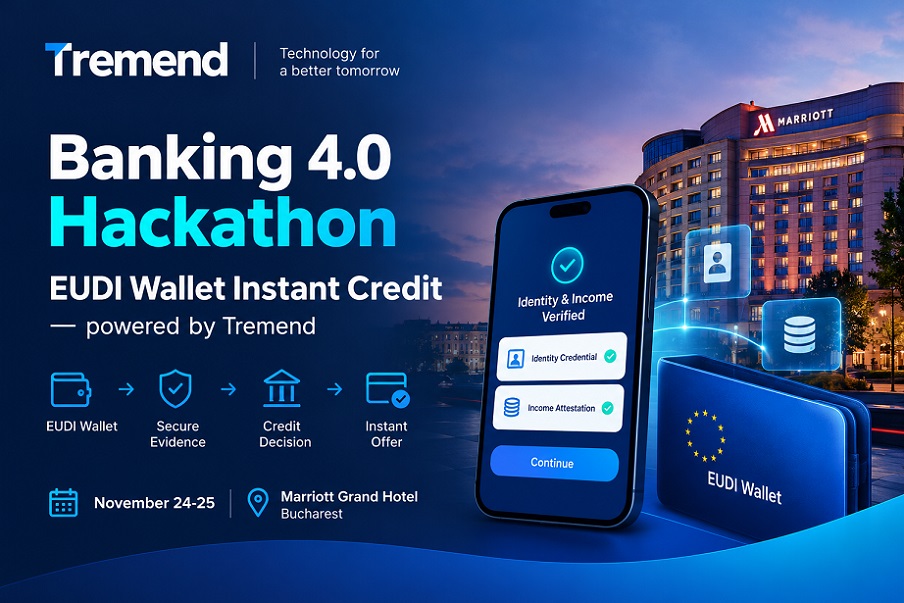
Banking 4.0 Hackathon: EUDI Wallet Instant Credit – powered by Tremend


Dariusz Mazurkiewicz – CEO at BLIK Polish Payment Standard
Banking 4.0 – „how was the experience for you”
„To be honest I think that Sinaia, your conference, is much better then Davos.”
Many more interesting quotes in the video below: