BIS Papers: Opening doors to open finance – evidence from the international experience

Open finance is transforming the financial system, with rapid adoption in several jurisdictions in the years since its introduction. By enabling the sharing and use of customer-permissioned data, open finance can foster innovation, competition and financial inclusion.
Early evidence highlights a role for open finance in breaking through data silos, reducing information asymmetries and driving venture capital investment. Successful implementation depends on standardised data sharing protocols and interoperability that enable seamless payment system connectivity and data exchange, all underpinned by robust regulatory frameworks.

This paper examines international experiences with open finance, shedding light on its impact on competition, market entry and financial access, while discussing the challenges that remain.
In the conclusion section, the authors commented that although open finance holds strong potential to enhance consumer empowerment, promote competition, drive innovation and advance financial inclusion, there is a strong need for careful risk mitigation.
There are a number of open questions where further research will be needed.
While the initial evidence highlights the benefits of open finance in fostering fair competition, innovation and financial inclusion, more work is needed to understand the long-term impacts on market structure, financial intermediation and consumer welfare.
Moreover, the role of data protection, privacy frameworks and pricing mechanisms for data access in shaping the adoption and success of open finance initiatives remains underexplored. Future research could examine the trade-off between data sovereignty/privacy and gains from open finance initiatives.
Another interesting avenue to explore could be how variations in open finance frameworks across jurisdictions affect consumer trust and participation in financial markets.
Advancing open finance will also require deeper investigation of key performance indicators. This could include providing incentives to market participants, improving consent management mechanisms and establishing clear liability frameworks to ensure transparency, security and accountability (OECD 2023)).
Open finance has the potential to bridge critical data and market gaps by expanding beyond sharing of consumer data to include SME transaction-level information, particularly sex-disaggregated data for women-owned businesses and alternative data for SME credit scoring. Leveraging these data sources globally could advance financial inclusion by offering tailored financial products and services and closing credit gaps for underserved enterprises. It could also inform research on how inclusive data sharing frameworks can strengthen economic resilience and foster inclusive growth.
The authors conclude: „Addressing these research gaps will be critical to designing resilient, inclusive and trustworthy open finance ecosystems that balance innovation with consumer protection and market integrity.”
More details: BIS Papers No 168 – Opening doors to open finance – evidence from the international experience

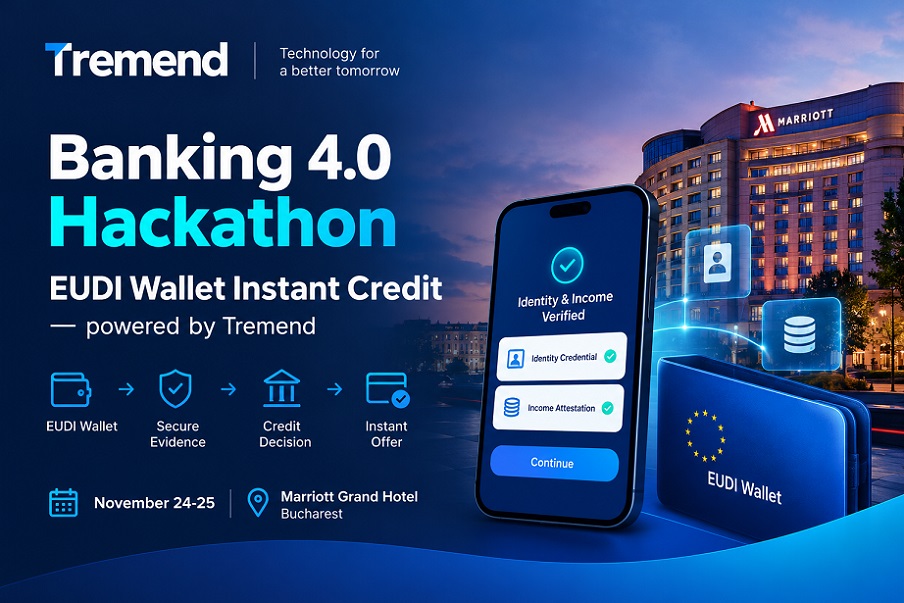
Banking 4.0 Hackathon: EUDI Wallet Instant Credit – powered by Tremend



Dariusz Mazurkiewicz – CEO at BLIK Polish Payment Standard
Banking 4.0 – „how was the experience for you”
„To be honest I think that Sinaia, your conference, is much better then Davos.”
Many more interesting quotes in the video below: