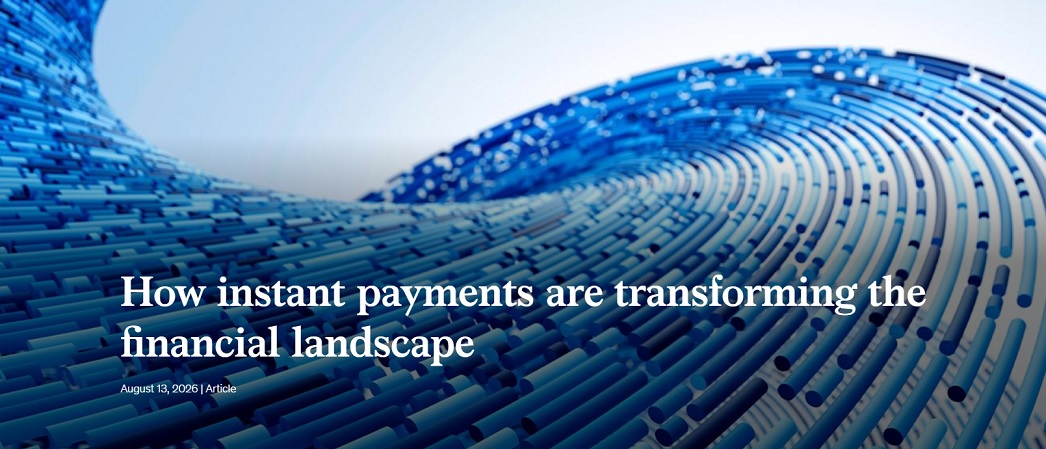
McKinsey examines instant payments in India, Brazil, the US, and Mexico, and while impressed with the 15-18% annual growth, it somehow can’t figure out why India and Brazil succeeded while the US and Mexico stalled.
Richard Turin, Fintech, AI and Innovation Consultant, explains why.
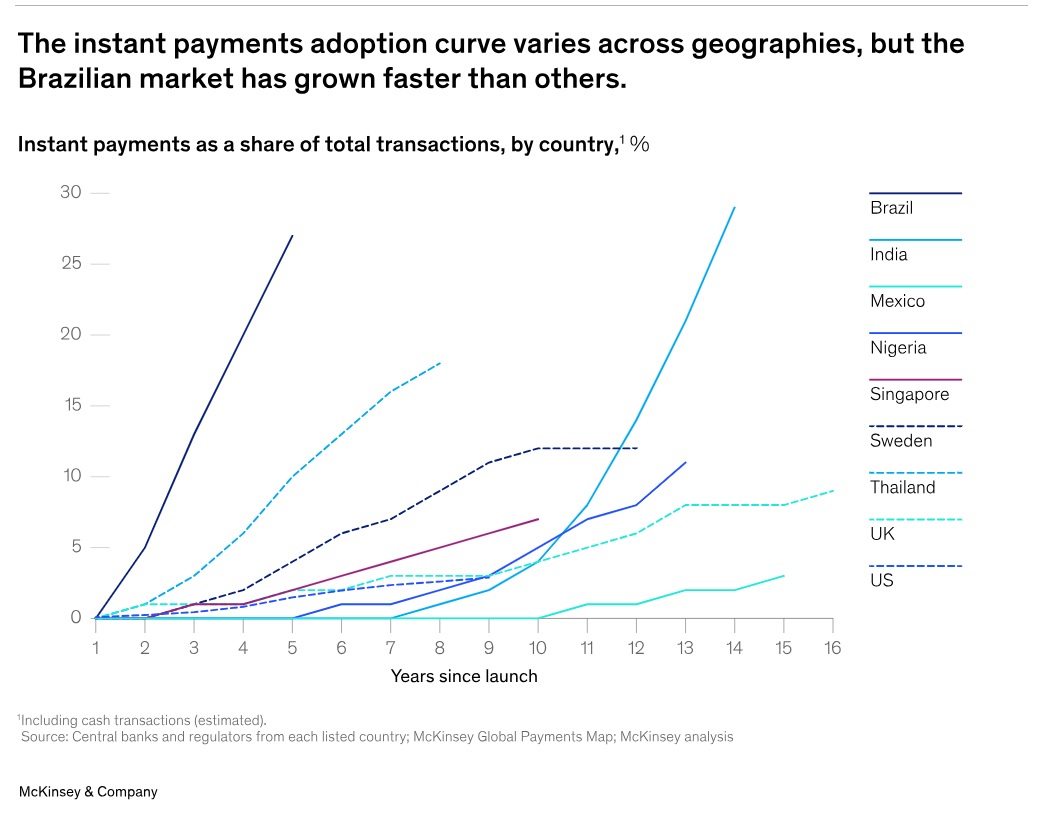
UPI and Pix were built as digital public infrastructure with universal access by design. India mandated bank participation and zero fees. Brazil’s central bank required its largest banks to join Pix. The result? UPI processes 19 billion transactions a month. Pix handles 80% of Brazil’s P2P payments.
The US and Mexico, in contrast, left participation in instant payments to the banks’ discretion. The result? Only 1,800 of 9,000 US banks have joined FedNow, while in Mexico instant payments are only 5% of payment volume.
Both nations relied on banks for distributing instant payments, yet McKinsey can’t see the problem. Why would banks voluntarily make payments free when card interchange is a profit machine?
For the US, McKinsey casually observes that Zelle, owned by banks, processed 4.2 billion transactions in 2025, nine times the combined volume of FedNow and RTP. Somehow, the smartest guys in the room didn’t figure out that banks are routing demand to the system they control and profit from.
The report also frames instant payments as just 1% of $2 quadrillion in global flows in a move to minimize instant payments’ impact. That $2 quadrillion includes wholesale and interbank transfers that instant rails were never built to handle. Comparing retail volumes with wholesale flows deliberately diminishes the impact of instant payments.
The report data is clear, but McKinsey fails to acknowledge it: digital public infrastructure is what makes instant payments successful, while bank control kills them.

McKinsey report: How Instant Payments are Transforming Financial Landscape




Banking 4.0 – „how was the experience for you”
„To be honest I think that Sinaia, your conference, is much better then Davos.”
Many more interesting quotes in the video below: