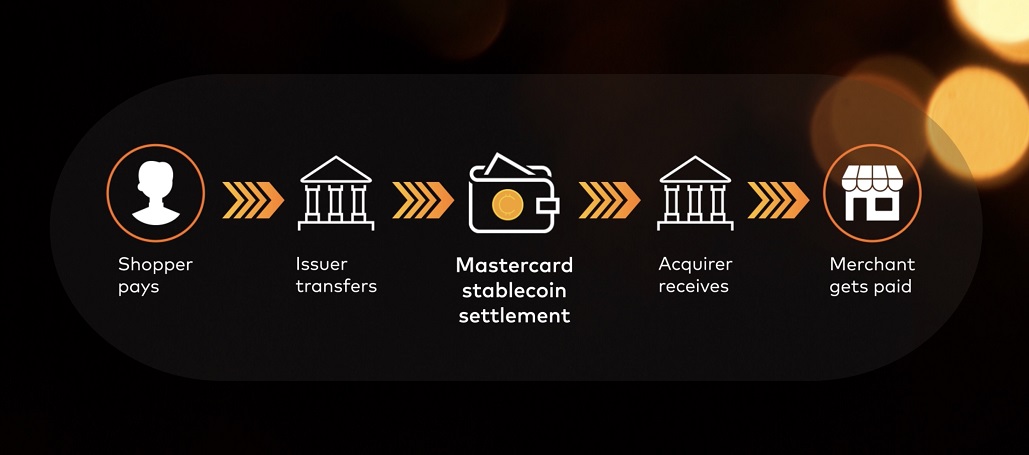
The future of settlement is programmable, instant and global.
Mastercard today announced plans to expand its settlement capabilities with additional intraday, weekend and holiday card settlement, supporting both fiat currencies and on-chain card settlement using regulated stablecoins.
„Together, these enhancements will give issuers and acquirers greater flexibility in how they settle card-based transactions across Mastercard’s global payments network, helping improve liquidity management and expanding choice in how money moves.” – according to the press release.
Mastercard’s global payments network today supports a wide range of settlement models, enabling issuers and acquirers to operate in ways that align with their business, regulatory and liquidity needs.
These enhancements introduce greater flexibility in how partners manage settlement timing and liquidity while continuing to operate alongside existing processes. They are particularly relevant for use cases where timing and transparency are key, including cross-border payments, treasury and payouts.
Stablecoin-based settlement represents one of these options, allowing partners to incorporate regulated digital assets alongside existing processes as adoption evolves.
Mastercard will support settlement using regulated stablecoins including Circle’s USDC, which is already supporting early on-chain settlement flows in select markets, as well as Paxos-issued stablecoins including PYUSD, USDG and USDP, Ripple’s RLUSD and SoFi’s SoFiUSD. These stablecoins will be enabled across a range of supported blockchain networks including Arbitrum, Base, Canton, Ethereum, Polygon, Solana, Tempo and XRPL.
ARQ (formerly known as DolarApp), CBW Bank, Cross River, Lead Bank and Nuvei are expected to be among the first to support stablecoin settlement optionality in the United States and Latin America, with further expansion planned through 2026.
Mastercard’s expansion of stablecoin settlement optionality builds upon earlier pilots and initial live deployments, reinforcing the company’s broader strategy to support stablecoins and digital assets responsibly across acceptance, settlement and programmable payment flows.
Designed as a scalable, network‑level enhancement, Mastercard’s settlement enhancements will allow partners to access both traditional and digital asset-based settlement through the same global infrastructure they use today. This approach ensures consistency, scalability and interoperability across Mastercard’s global ecosystem while preserving existing protections including security standards, fraud safeguards and dispute processes.
“The next phase of stablecoin adoption is about real-world utility, especially in settlement, where timing and liquidity matter most,” said Raj Dhamodharan, executive vice president, Blockchain & Digital Assets at Mastercard. “By introducing intraday and weekend on settlement options across our global network, we’re expanding how partners manage liquidity and operate in an always-on digital economy while maintaining the trust, resilience and safeguards they expect from Mastercard.”
Mastercard remains committed to bringing emerging technologies into established payments infrastructure in a way that is scalable, interoperable and aligned with regulatory frameworks — helping partners adopt on-chain capabilities without disrupting existing operating models.
The expanded settlement capabilities will continue to roll out globally, subject to regulation, with additional regions, partners, and regulated stablecoins expected to be added over time.
“At ARQ, stablecoins have been core to our infrastructure from day one. They’re how we deliver real-time, cross-border financial solutions at a fraction of traditional costs,” said Álvaro Correa, co-founder and chief operating officer, ARQ. “Partnering with Mastercard to enable on-chain settlement is a major step toward building the financial infrastructure we envision for the Americas.”
“As demand grows for faster and more flexible movement of money, organizations are increasingly seeking infrastructure that can operate beyond traditional banking hours,” said Kash Razzaghi, chief commercial officer, Circle. “Mastercard’s expanded settlement capabilities help meet that need, offering greater choice in how value is transferred and settled. We’re proud to support these efforts through USDC and help advance the use of regulated stablecoins in global payments.”
“We’ve seen firsthand the accelerating demand from our partners for faster, more transparent settlement — and stablecoins have emerged as a powerful tool to meet that need,” said Luca Cosentino, head of on-chain finance at Cross River. “Mastercard’s decision to bring on-chain settlement to its global network validates what we’ve been building toward: a future where digital asset rails operate seamlessly alongside traditional payments infrastructure. Cross River is thrilled to be at the forefront of this evolution.”
“Partnering with Mastercard to help bring this network to life reflects Lead’s commitment to building the rails that make regulated digital assets practical for institutions and their customers at scale,” said Jackie Reses, CEO and co-founder, Lead Bank. “At Lead, we believe the future of financial infrastructure is 24/7, and on-chain settlement is where that future becomes real. We’re proud to be among the first platforms to deliver this capability in the United States and see this as a foundational step toward a more efficient, always-on financial system.”
“As part of Nuvei’s broader strategy to bring stablecoin capabilities into payments infrastructure, this collaboration with Mastercard extends settlement options alongside traditional payment rails, creating new opportunities for customers to improve liquidity, streamline global disbursements, and gain greater flexibility in how funds move,” said Phil Fayer, CEO, Nuvei.
“The future of settlement is programmable, instant and global,” said Peter Jonas, chief revenue officer, Paxos. “Paxos’s regulated infrastructure gives partners like Mastercard a trusted path to on-chain settlement using PYUSD, USDG, and USDP that works seamlessly alongside existing systems, helping advance more efficient payment flows.”
“Mastercard’s move into on-chain settlement is a landmark validation that blockchain technology is ready for the world’s most critical payment infrastructure,” said Jack McDonald, senior vice president, Stablecoins, Ripple. “RLUSD’s inclusion in Mastercard’s global settlement network reflects growing demand for trusted, regulated stablecoins built for real-world financial use cases on public blockchains like the XRP Ledger. We’re excited to support the next evolution of faster, more flexible, always-on settlement.”



Banking 4.0 – „how was the experience for you”
„To be honest I think that Sinaia, your conference, is much better then Davos.”
Many more interesting quotes in the video below: