Banks still have real advantages: relationships, regulatory strength, credibility. But SMEs and corporates are asking for the same basics: real-time settlement, clear pricing, seamless integration, flexibility. In fact, 22% of CEE SMBs are already using both banks and fintechs as providers. Expectations are moving faster than infrastructure.
The cross-border payment landscape within Central Eastern Europe (CEE) is undergoing a rapid transformation. In recent years, fintechs and neobanks have rapidly gained ground in the Retail space by delivering faster, cheaper and more intuitive services. Banks, once dominant in this segment, have seen their share erode in a market now worth over €46 billion and growing. The question we are asking now is: will history repeat itself in the Commercial market?
„Fintechs are already making inroads with SMBs and have their eyes on large corporates. To maintain leadership, banks need to act decisively – not with one-size-fits-all approaches, but with tailored solutions that meet evolving client needs.” – according to the latest Visa report on cross-border payments.
In 2024, global remittance volumes reached $905 billion across all regions – an impressive 8.5% growth over the past three years. ($234 billion originated from European countries, accounting for over a quarter (27.6%) of global remittances). To put this in perspective, nearly one billion people worldwide send or receive remittances.
More than half of remittance users globally expect to send more or the same amount of money abroad in 2025. Fintechs have already secured a strong foothold in this space.
„Traditional cross-border payment models are becoming outdated. To stay competitive, banks must evolve with changing business needs.” said Visa Consulting & Analytics.
Transfers to neobanks and specialised remittance providers have surged by more than 40% over the past three years, while traditional banks today facilitate only about one‑quarter of international peer‑to‑peer money transfers.
„For banks, this represents a critical moment: the opportunity is significant. They also face the risk of losing cross-border revenue and wider income streams, as fintechs expand into traditional banking services with an intent to capture a greater share of business.” – the report said.
Customers’ loyalty to banks is no longer guaranteed
Many customers have historically stayed with banks out of trust, familiarity or lack of awareness over new alternatives, despite pain points like high fees and slow transfers. But that loyalty is eroding. Fintechs are now more visible and accessible, engaging customers through intuitive digital platforms and replacing the personal bank relationship with seamless digital experiences. Furthermore, fintechs are redefining market expectations.
According to the report, „banks are at risk of losing customers, not just for cross-border payments but for other revenue streams of their core banking business, such as investments and loans”.
„I split my time across CEE countries, discussing with clients, and one thing is clear: expectations for cross-border payments have changed faster than the operating models behind them. In Central and Eastern Europe, more than $25B (!) moved from traditional banks to fintechs in retail payments in just a year. Not because trust disappeared, but because customers now expect speed, transparency, and a digital-first experience as standard.” – said Claudia Cruceru, Sr. Director, Head of Visa Direct for Central and Eastern Europe.
She continued: „This is a moment for practical decisions. Where can we remove friction, automate, and give clients clarity upfront? Because in cross-border, time and transparency are no longer features, they’re the product.„
Nic Balaceanu, the CEO of Lendrise commented: „In CEE, the real bottleneck is still settlement. UX and pricing improved, but delays and intermediaries keep friction in the system. What’s changing is the rise of real-time, programmable settlement layers, including stablecoins, bringing cross-border closer to domestic. CEE could leapfrog if we move beyond optimizing current rails.”
Catalin Dumitrescu, former central banker and co-founder of Stratum Finance: „Settlement remains the structural bottleneck, not UX or pricing. The real issue is not just speed, but fragmentation. In CEE, value still moves across multiple disconnected balance sheets before reaching finality.
Programmable settlement layers (including regulated stablecoins) solve finality — but they don’t solve coordination. What’s missing is an orchestration layer that connects real economy flows (utilities, payroll, B2B) with these rails, so value doesn’t just move faster, but actually circulates within the system.
Otherwise, we risk building faster rails that still lead to the same fragmented outcomes.”
For a deeper look, see Visa’s latest whitepaper on cross-border payments in Central & Eastern European markets (CEE – Romania, Poland, Slovakia, Slovenia, Croatia, Hungary, Bulgaria and Czech Republic).
Visa Consulting & Analytics (VCA) presents a white paper, analysing the rapid transformation of cross-border payments in Central Eastern Europe, highlighting how fintechs and neobanks have disrupted the person-to-person Retail payments market and are now poised to challenge banks in the much larger business-to-business Commercial segment.
It explores the evolving expectations of businesses and consumers for faster, cheaper and more transparent payment solutions, identifies the pain points driving clients away from traditional banks and outlines the strategic actions banks must take to defend their market share.

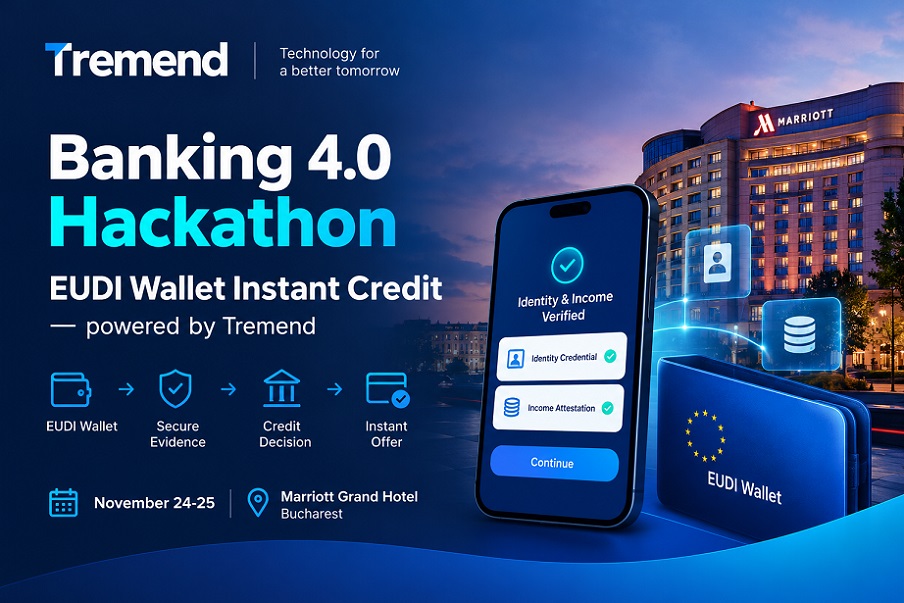


Banking 4.0 – „how was the experience for you”
„To be honest I think that Sinaia, your conference, is much better then Davos.”
Many more interesting quotes in the video below: