Volatility sharpens institutional approach to crypto but doesn’t dampen enthusiasm – survey

Despite a challenging market environment, investors are committed to crypto for the long term. That’s the key takeaway from a 2026 EY-Parthenon team and Coinbase survey of 351 institutional investors. Nearly half (49%) of respondents have strengthened their emphasis on risk management, liquidity, and position sizing in response to market volatility. Nonetheless, almost three-quarters (73%) plan to increase their crypto allocations in 2026, and 74% of investors expect crypto prices to rise over the next 12 months.
In practice, this means institutions are applying increasingly rigorous due diligence for how they engage with the asset class, putting robust controls, clear governance, and operational resilience front and center. Two structural themes are underpinning institutional momentum: new real-world use cases for stablecoins and the belief that tokenization is on the verge of significantly disrupting current market structure.
The findings below represent a selection of key insights from the survey; explore the full results here.
Access: ETFs are primary vehicles for crypto exposure
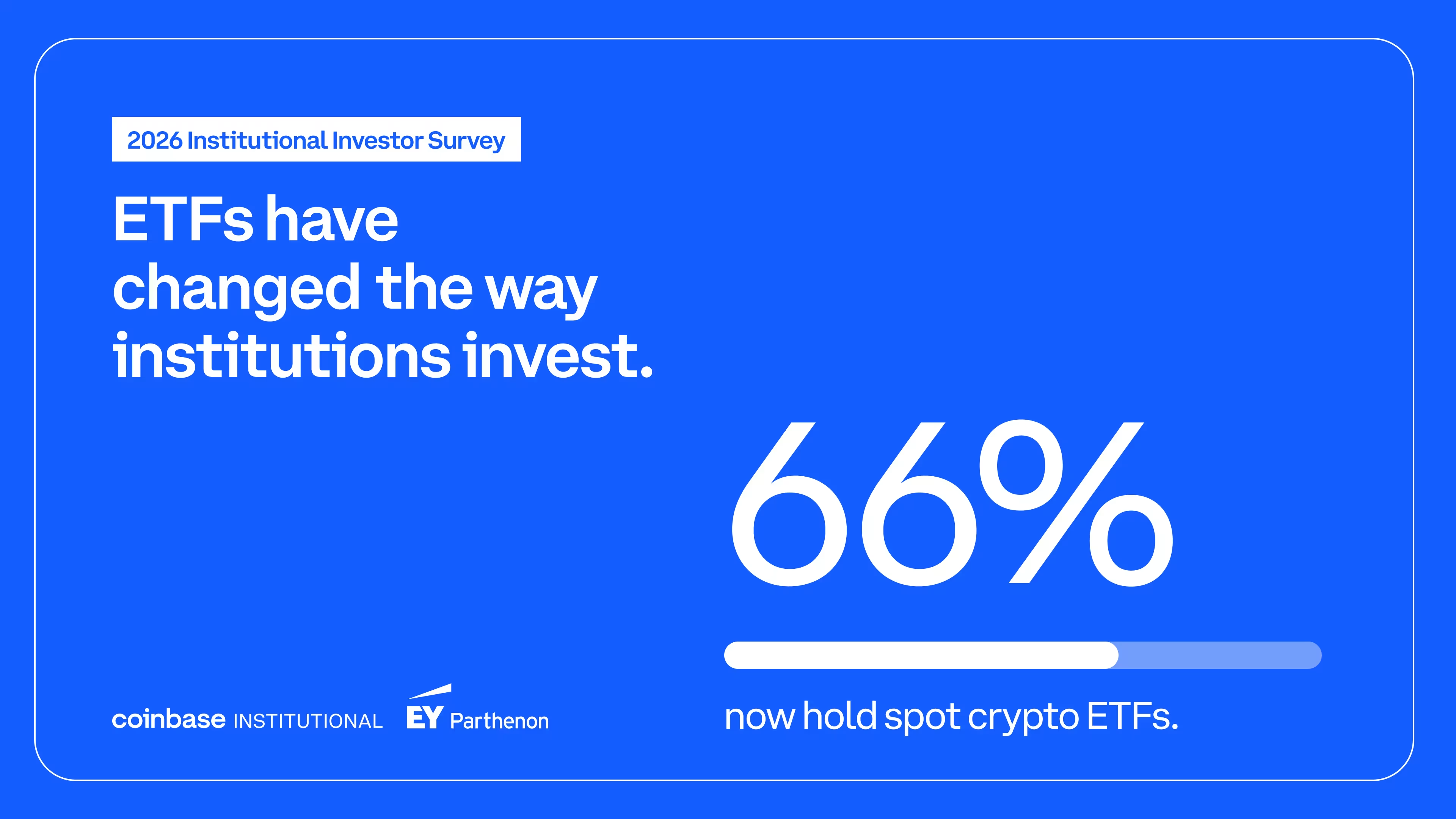
Regulated products have become the default entry point for institutional crypto exposure. Two-thirds (66%) of respondents already hold spot crypto ETFs and ETPs, and 81% said they prefer accessing spot crypto through a registered vehicle. This suggests that compliance clarity and robust investor protections are no longer optional; they are the foundational requirements for institutional participation at scale.
Stablecoins: The new institutional plumbing
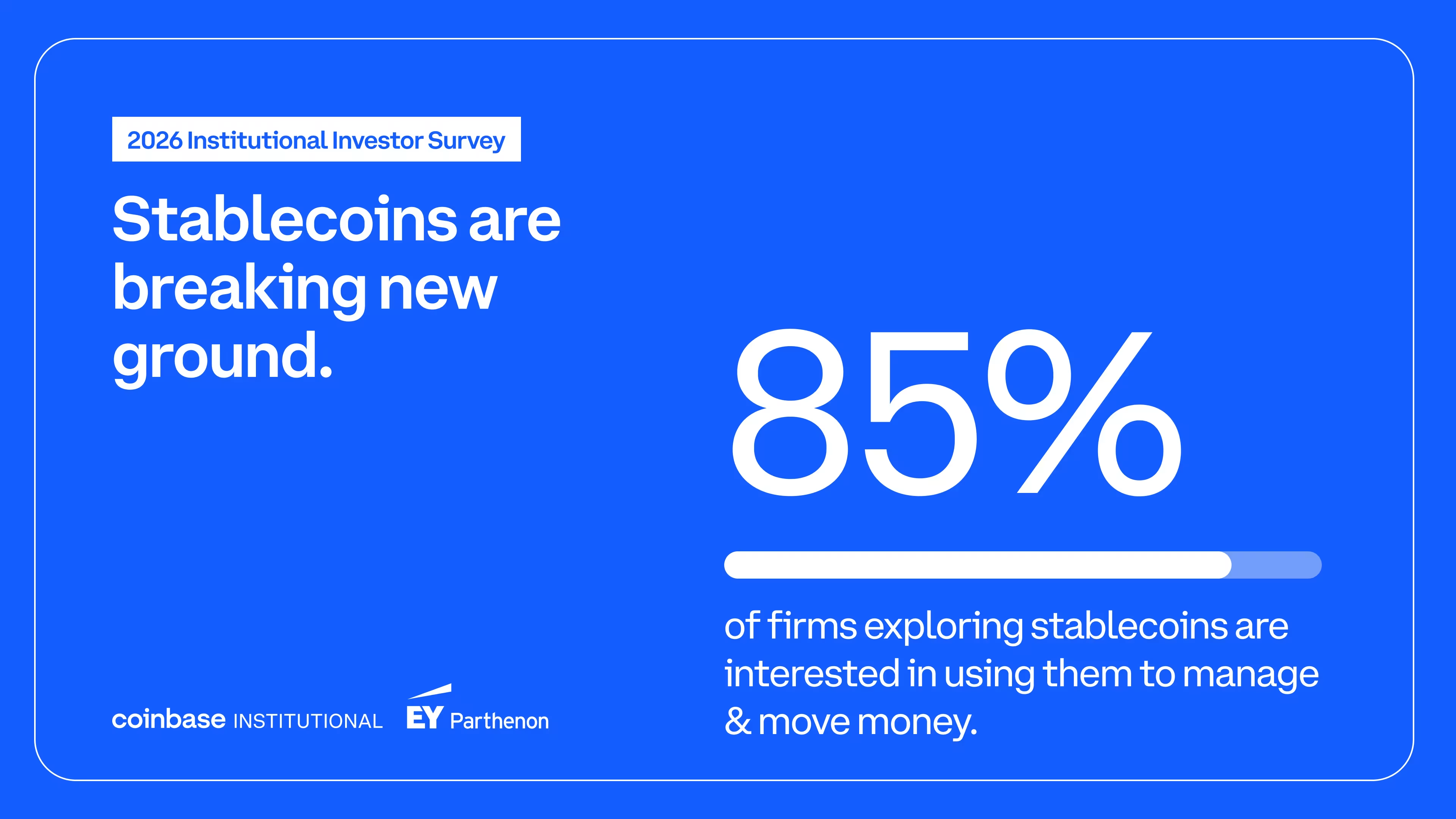
Stablecoins have evolved far beyond their original role as trading facilitators. Today, 86% of investors are already using or actively exploring stablecoins for internal cash management, money movement, and more. As adoption matures, firms are responding by formalizing governance around counterparty risk, reserve transparency, and 24/7 workflows, ensuring stablecoins can be integrated into existing frameworks without compromising internal controls.
Tokenization: Beyond the pilot phase
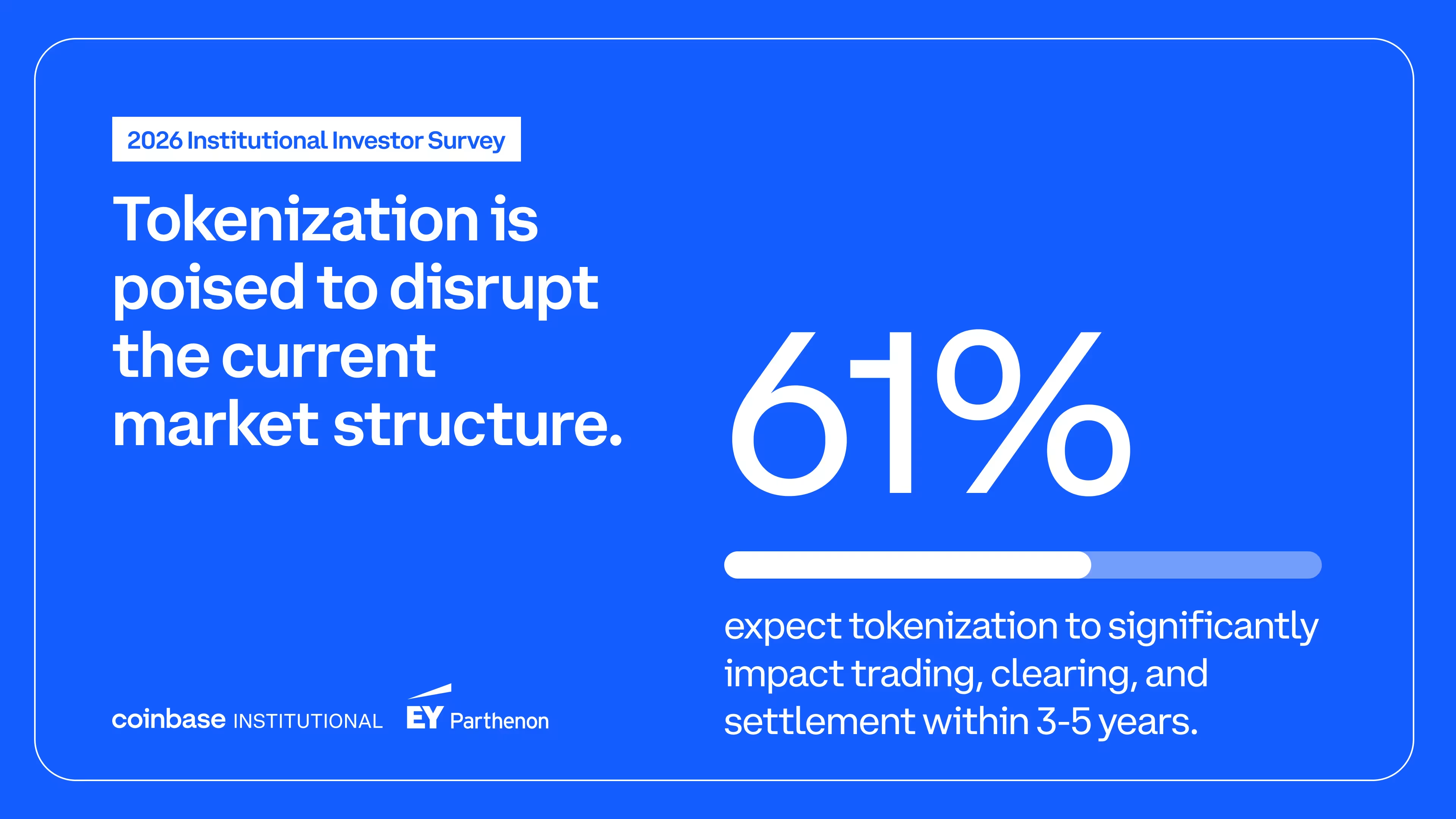
Tokenization is following a similar trajectory. Asset managers’ interest in tokenizing their assets jumped from 40% to 64% in the past year, and 63% of investors are interested in allocating to tokenized assets. Underlying this enthusiasm is the belief that tokenization will soon begin to disrupt the current market-structure framework: 61% of investors expect tokenization to have a significant impact on trading, clearing, and settlement over the next three-to-five years. That said, respondents cited a variety of hurdles that still need to be overcome, chiefly the uncertain regulatory environment and the challenges of integrating tokenized assets.
Regulation: Clarity needed on market structure
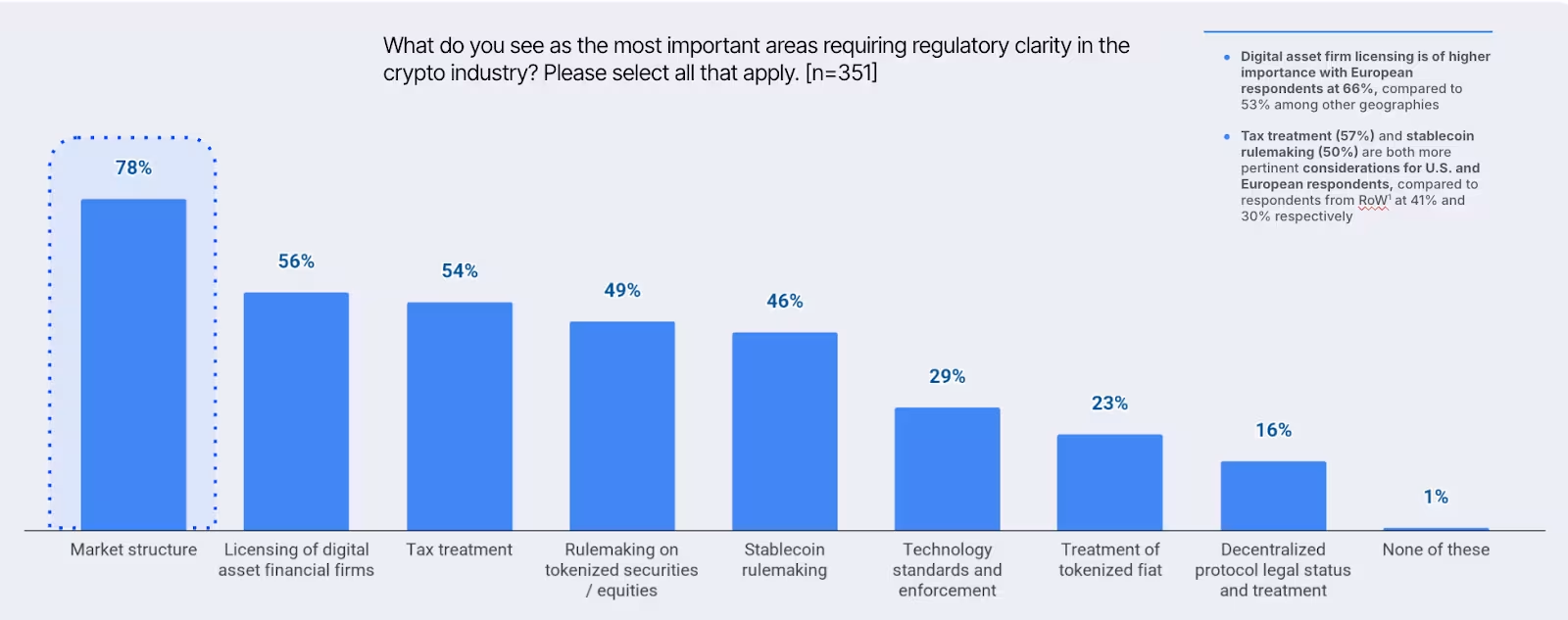
Regulatory clarity is a double edged sword, acting as both a driver but also a stumbling block for firms seeking to engage in crypto. Among firms planning to increase holdings in 2026, 65% cite improved regulatory clarity as the number one factor behind their decision to boost crypto exposure. At the same time, the uncertain regulatory environment is the primary concern when investing in digital assets (66%). Drilling down, 78% of respondents identify market structure as the area most in need of clear regulatory guardrails.
Looking ahead
As we move forward, institutional participation in digital assets is shifting from experimentation to execution. With the expected increase in tokenization and the deepening integration of stablecoins into global finance, the industry is building a more durable, regulated, and scalable market structure for the future.




Dariusz Mazurkiewicz – CEO at BLIK Polish Payment Standard
Banking 4.0 – „how was the experience for you”
„To be honest I think that Sinaia, your conference, is much better then Davos.”
Many more interesting quotes in the video below: