Cross-border payments (XBP), particularly remittances and retail transactions, remain more costly, slower, less accessible, and less transparent than domestic payments. The continued inefficient XBP arrangements, in contrast to progress made in domestic payments using new technologies and innovative models, reflect that private actors alone cannot overcome the many market failures that hinder XBP.
The most binding constraint concerns the limited interoperability which relates to the multi-sided market frictions in XBP and the institutional differences between countries. These, ultimately, only proactive and collaborative public sector efforts can overcome. Key priorities are therefore greater harmonization of standards, especially for message transmission, more effective compliance regimes, and promotion of competition.
DLT, De-Fi and Stablecoins
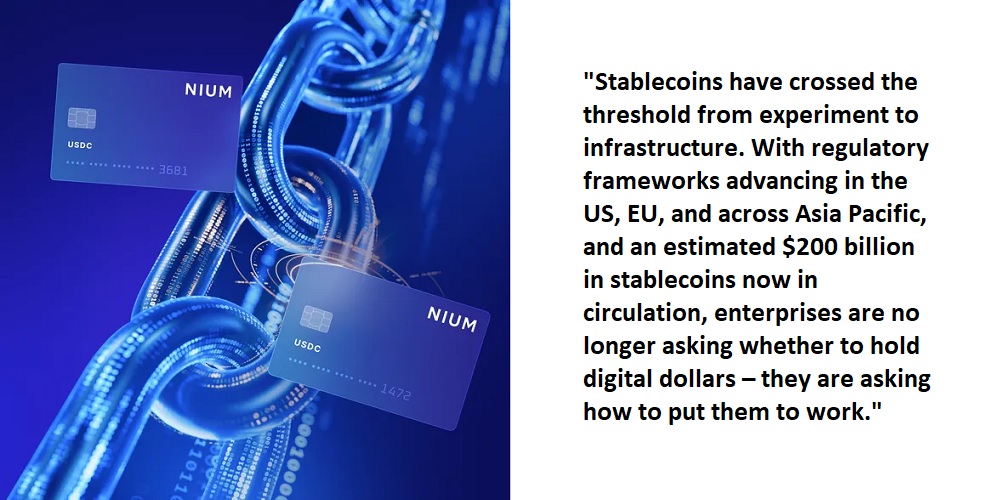
DeFi allows for borderless accessibility via permissionless, open-access peer to peer blockchains (DLT), but mainstream adoption for XBP faces significant challenges in AML/CFT compliance, supervision, privacy and scalability. Recently, there is more interest in using stablecoins for XBP. Using the platforms and protocols of DeFi or other DLT-based modalities, which do not require participation in national banking systems, some argue stablecoins can unlock access to safe and low-cost XBP and enable automatic payments and real-time treasury and liquidity management for global enterprises.
Some financial institutions and companies worldwide are already exploring related possibilities (e.g., PayPal has introduced a stablecoin for remittances). But many questions remain whether DLT, DeFi and stablecoins can provide safe and efficient payments services. Many observers today think that given the risks, other ways to improve XBP are preferred. Overall, DeFi’s and stablecoins’ potential roles in safe and legitimate XBP will likely remain doubtful unless three issues are addressed.
First, to make stablecoins usable as XBP instruments requires a globally consistent legal framework. Major countries have recently adopted regulatory frameworks, e.g., the EU, Singapore, and the U.S. (21) These steps, along with detailed guidance from their supervisory agencies, can substantially reduce regulatory uncertainty. But globally the landscape still varies, including some countries banning private stablecoins. (22) Also, importantly, even under some of the new regulations, stablecoins can fall short of being “money” when set against the tests of singleness and elasticity.
Furthermore, while having grown much, but not being especially well and consistently regulated, stablecoins can raise systemic financial stability issues. And there are monetary sovereignty issues, particularly for small open and emerging economies.
Second, the regulatory framework must ensure financial integrity and protect users. Although DLT enables direct peer-to-peer transfers, it often relies on permissionless channels outside the traditional regulatory perimeter. Combined with its pseudonymous and borderless nature, this makes DeFi attractive to use for illicit purposes.(23) The Financial Action Task Force (FATF), the international body in charge of AML/CFT is addressing this (FATF, 2025), but as regulatory and legal frameworks are evolving, achieving compliance remains complex.24 Today, AML/CFT enforcement is practically only feasible when converting stablecoins to and from local currencies (so called on- and off-ramps).(25) Regulating stablecoins will help reduce illicit use.
Ensuring regulated stablecoin issuers are integrated with clearing infrastructure can further help enforce compliance throughout the transaction lifecycle, not merely at conversion points. Frameworks need also to ensure consumer protection and data privacy (e.g., DLT-based systems come with new legal risks arising from the joint performance of services and functions in DLT).
Third is the lack of interoperability and limited scalability. DLT-based solutions require specialized on- and off-ramps or other such means to connect with the traditional financial system, hindering seamless integration. And they obviously cannot handle cash. Unproven is also their ability to scale up.
More details: BIS Papers No 167
Cross-border payment technologies: innovations and challenges
_____________
(22) FSB (2025b) reports “significant gaps and inconsistencies” in implementation of crypto and stablecoin
recommendations that “could pose risks to financial stability”, noting that implementation for
stablecoin frameworks is slower and uneven which “creates opportunities for regulatory arbitrage.”
(23) Today, DeFi is reportedly much used for illicit XBP transactions (e.g., Cerutti, Chen & Hengge (2024)
estimate about $8 trillion annually, much of it involving countries with outright bans on
cryptocurrencies or subject to sanctions).
(24) The 2021 FATF Guidance for a Risk-Based Approach to Virtual Assets and Virtual Asset Service
Providers, which cover this, are not fully implemented.
(25) Some (e.g., Aldasoro et al. 2025) propose to use DLT to score transactions for AML/CFT risk, usin




Banking 4.0 – „how was the experience for you”
„To be honest I think that Sinaia, your conference, is much better then Davos.”
Many more interesting quotes in the video below: