When the ECB launched the Digital Euro, it promised public digital fiat wouldn’t crowd out private solutions. Yet, a major debate is unfolding: will Third-Party Providers (TPPs) and Payment Initiation Service Providers (PISPs) be excluded from the baseline ecosystem?
A blog article by Haluk Inanmış – General Manager at Inted Ltd.

Here is what’s happening behind closed doors:
1. Pilot Exclusion & Legislative Loopholes
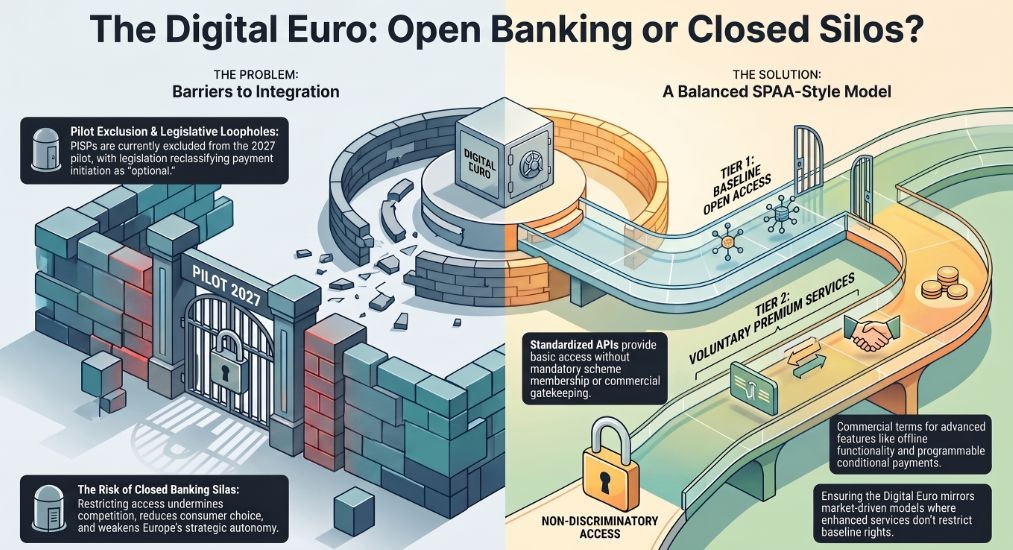
The European Third Party Providers Association (ETPPA) raised alarms after open banking providers were excluded from the ECB’s upcoming 2027 pilot project, which focuses strictly on account-servicing banks. More critically, draft legislative texts (like Recital 30) classify payment initiation as an optional service instead of a basic one. This subtle shift means the automatic access rights guaranteed under standard PSD2/PSD3 rules might not apply to the Digital Euro.
2. The Risk: Closed Banking Silos
Elevating the Digital Euro above standard open banking laws sets a dangerous precedent:
Undermining Competition: Conditioning access on commercial agreements risks excluding licensed PISPs and crippling the booming “Pay by Bank” momentum.
Stifling Innovation: The evolution from Open Banking to Agentic Commerce relies on open APIs. Shutting out TPPs cuts off the infrastructure needed for machine-driven commerce.
Blow to Autonomy: Restricting access could inadvertently push consumers toward non-European payment alternatives, like US dollar stablecoins.
3. The Solution: A Balanced Model
To prevent closed silos, the ETPPA and joint industry voices advocate for a two-tier approach based on user consent (mirroring the SPAA scheme):
. Baseline Open Access: No mandatory scheme membership or commercial gatekeeping for basic account access via standard APIs.
. Voluntary Participation: Premium features (e.g., offline functionality or programmable conditional payments) commercialized under fair terms.
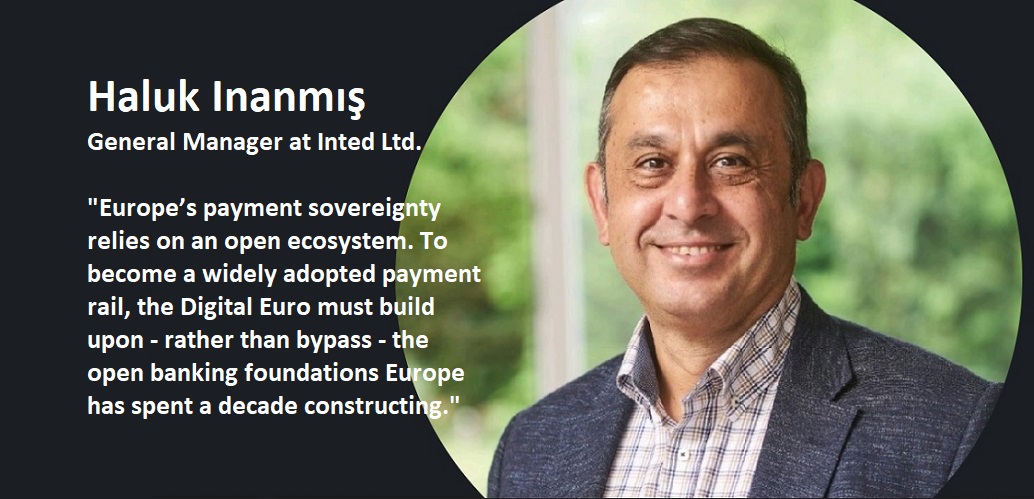
The Bottom Line Europe’s payment sovereignty relies on an open ecosystem. To become a widely adopted payment rail, the Digital Euro must build upon—rather than bypass—the open banking foundations Europe has spent a decade constructing.


Banking 4.0 – „how was the experience for you”
„To be honest I think that Sinaia, your conference, is much better then Davos.”
Many more interesting quotes in the video below: