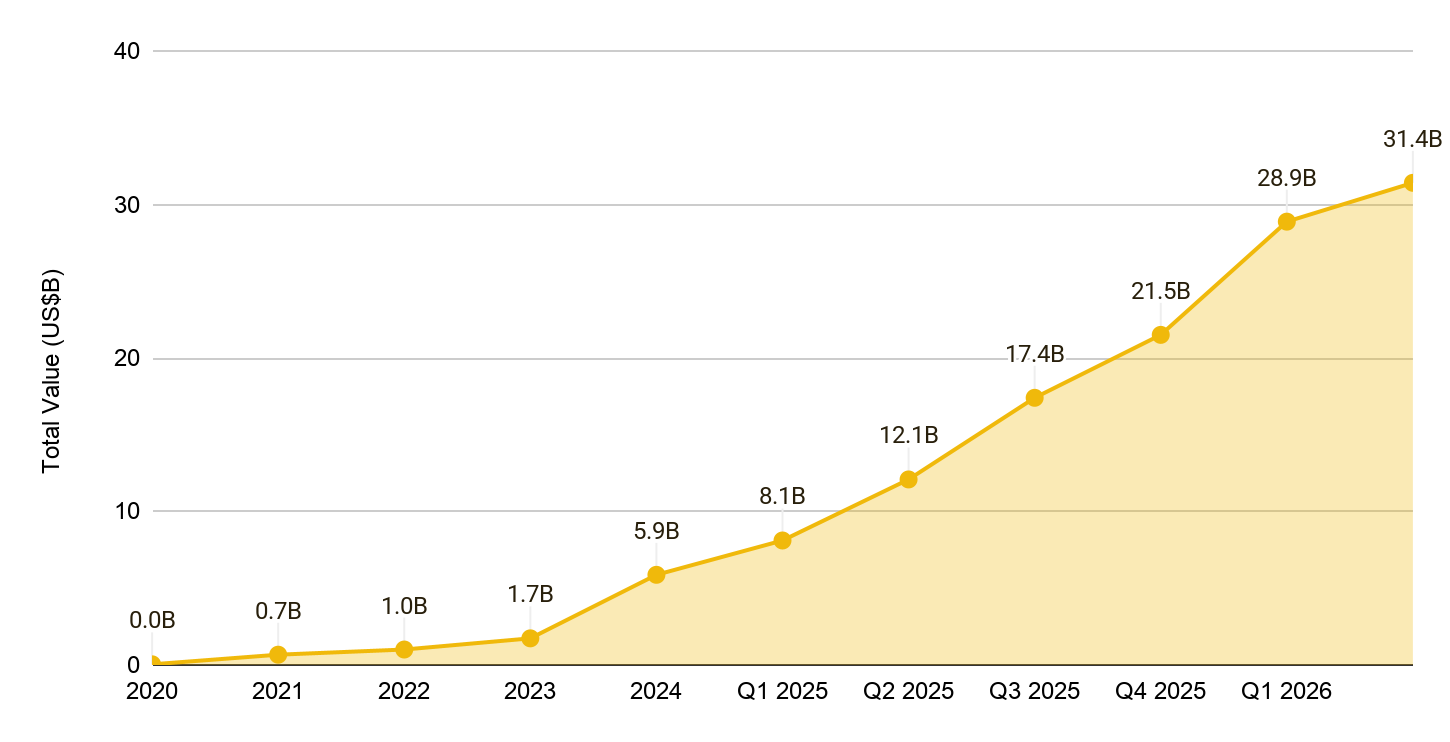
Distributed real-world asset value has reached US$31.4B, up from around US$21.5B at the start of 2026 – five times higher than at the start of 2025 – a Binance research
The tokenized asset growth curve is steepening. According to the latest Binance research, distributed real-world asset (RWA) value has reached US$31.4B, up from around US$21.5B at the start of 2026 and roughly five times higher than at the start of 2025 (figure 1).
The market is also becoming more institutional, led by tokenized U.S. Treasury products, gold-backed commodities, and tokenized public equities, which have risen from a small base to around US$1.4B.
Figure 1 – Tokenized asset market growth has accelerated sharply, with most gains concentrated over the past year
The broader tokenized footprint is materially larger than distributed asset value alone. Represented tokenized assets add a much larger institutional layer, stablecoin reserves embed more than US$200B of Treasury-linked exposure inside on-chain dollar instruments, and RWA perpetuals show growing demand for traditional asset exposure through crypto-native market structure.
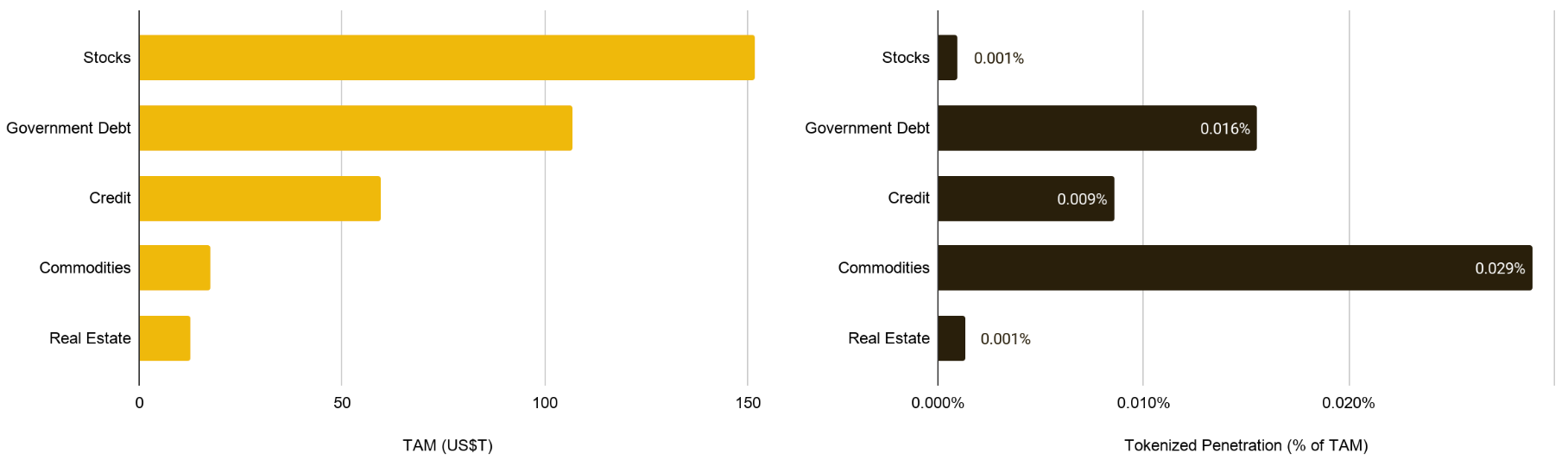
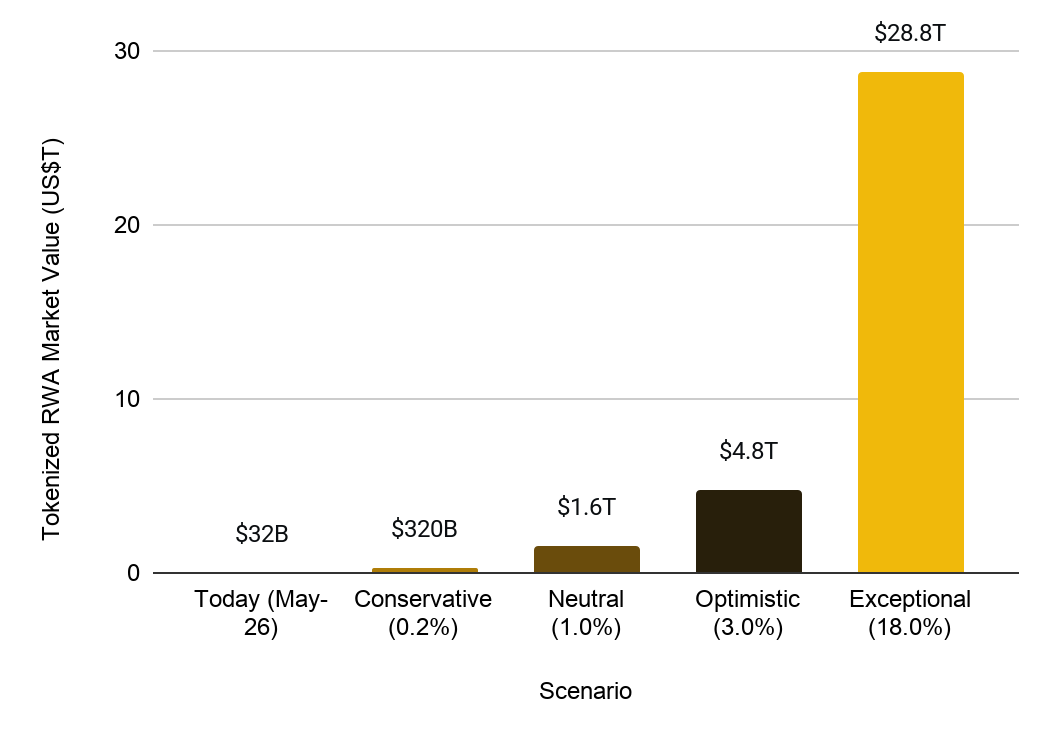
The long-term opportunity is large because current penetration remains extremely low. Across the five core asset classes modeled in this report, tokenized penetration of the total addressable market is around 0.01%. Even sub-1% aggregate penetration by 2030 would represent a potentially trillion-dollar market, with our base case suggesting around US$1.6T.
Figure 2 – Tokenized penetration remains minimal across large traditional asset markets
. The adoption path will depend less on aggregate demand alone and more on the convergence of regulation, custody, settlement infrastructure, liquidity, and institutional distribution. If these reinforce one another, tokenization could become a broader financial-market rail.
Figure 3 – 2030 tokenization scenarios
More details here: Tokenization’s Trillion-Dollar Runway




Dariusz Mazurkiewicz – CEO at BLIK Polish Payment Standard
Banking 4.0 – „how was the experience for you”
„To be honest I think that Sinaia, your conference, is much better then Davos.”
Many more interesting quotes in the video below: