Mastercard Economics Institute: significant shift across Europe as consumers reshape their priorities and the balance of their leisure time
New Mastercard research shows travel, food trips and outdoor activities are the top leisure priorities, with two in three Europeans seeking out human recommendations at the expense of algorithms. Nearly half (46%) are willing to spend less on tech and streaming to fund more experiences, with 57% willing to pay more for activities that support local businesses.
Europeans plan to log off and live more this summer, breaking free from algorithms and digital overload to dive into the trend for human-led experiences.
As „always-on” devices and AI become a bigger part of our lives working lives, new research from Mastercard reveals Europeans’ growing appetite for “touch-the-grass” leisure moments based around community, authenticity and intimacy.
Ahead of the holiday season, the study of more than 27,000 people across the continent digs into the behaviours and trends driving the human shift in the experience economy.
It shows European consumers are keen to uncouple from technology this summer, with two in three (64%) consciously seeking human recommendations over algorithms and three in five (60%) prioritising offline experiences to balance out time spent online. As screens compete for our attention, two-thirds of Europeans (63%) plan to attend digital detox events while 58% are seeking out communal activities to address the pressures of modern life – from repair cafes to fem rage sessions.
This momentum carries through into consumer spending priorities. Amid broader financial challenges, 46% of Europeans are willing to spend less on technology, gadgets or streaming services to afford more leisure activities, while three in five (59%) say they now value experiences more than ever. Data from the Mastercard Economics Institute1 reveals consumers’ share of spending on experiences (excluding travel) rose to 20.4% last year from 19.9% in 2024.
Natalia Lechmanova, Chief Economist Europe, at the Mastercard Economics Institute, comments: “We’re witnessing a significant shift across Europe as consumers reshape their priorities and the balance of their leisure time. Our findings point to something deeper than changing habits. As the pull of the digital world intensifies, they reflect a growing appetite for quality over quantity experiences, anchored in human connection.
“Whether it’s live events, cultural pursuits or activities discovered through a personal recommendation, people are leaning into moments that bring them together and leave a lasting impression.”
Mastercard’s analysis shows travel and tourism (79%) is the top choice for experience-hungry Europeans this summer followed by food-related activities (70%) and outdoor experiences (69%).
Digging deeper, it reveals Cypriots are Europe’s front-row kings, keenest to have experiences that bring them as close to the action as possible (59%). The Portuguese are the most social, with three in four (76%) favouring communal activities above going it alone. Romanians are first in the queue for trending experiences (46%), while the Irish most value leisure moments recommended by friends, family or colleagues (70%). Four in five Bulgarians (81%) feel experiences deliver their best life memories, the highest across Europe.
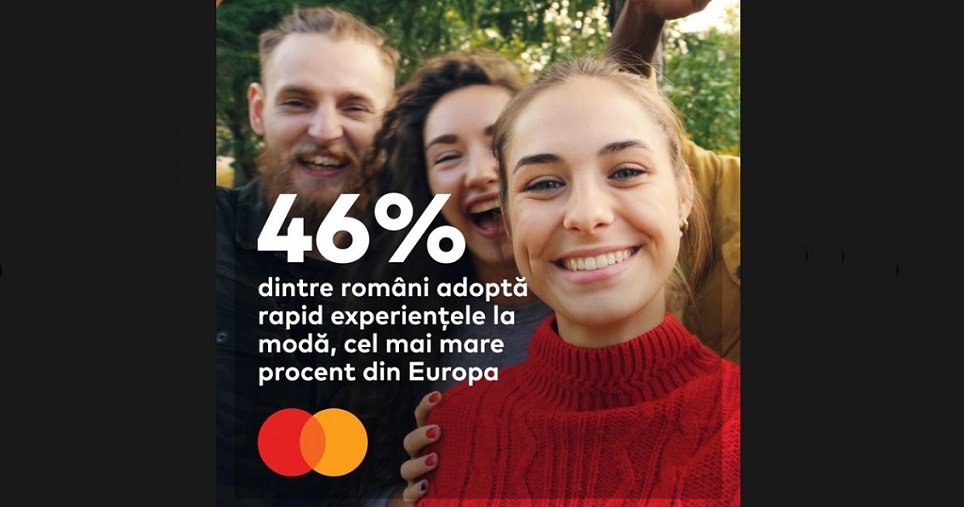
Cosmin Vladimirescu, General Manager Romania and Croatia, Mastercard: „People are looking again for things that can’t be put on a screen and for real human connection. What excites me most is that Romanians are leading this wave. 46% quickly embrace new trends, the highest share in Europe. That says something about who we are: curious, open, and never afraid to go first.„
Courtney Scharf, Futurist at Trend Hunter comments: “Europe is embracing the human touch when it comes to experiences this summer, but this isn’t a rejection of technology. Consumers are adopting automation for the efficiency it brings to work and everyday life, while increasingly balancing this out by spending their leisure time in ways that feel distinctly human. The more pervasive AI becomes and the more of our lives we spend online, the more valuable those personal experiences are.
“AI can deliver great insights in a split second, but it cannot recreate the chemistry of people sharing a space, or the unpredictability of a live moment. People are filling their social time more intentionally – choosing live music over streaming, communal activities over solo scrolling, and deeper connections over quick catchups. 2026 will be remembered as the year consumers rediscovered what only the real world can offer.”
Among trends like sauna raves and live-action jousting role-plays, the report reveals nostalgia is playing an increasingly significant role in the experience economy. Two in five Europeans (41%) expect to take part in more nostalgia-based experiences this year, with 72% seeking out experiences that revive past cultural moments, a trend supercharged by last year’s record-breaking Oasis reunion tour in the UK and Ireland.
The small business opportunity
The trend towards more intimate and personal activities presents a big opportunity for small businesses. Over half of respondents (52%) associate SMEs with providing higher quality experiences. while 57% are happy to pay more for activities that will benefit their local area or enterprises. More than half of consumers (51%) say they will consciously look to book activities through SMEs and 60% say they would use local businesses more often if they offered experiences as gifts.



Dariusz Mazurkiewicz – CEO at BLIK Polish Payment Standard
Banking 4.0 – „how was the experience for you”
„To be honest I think that Sinaia, your conference, is much better then Davos.”
Many more interesting quotes in the video below: