
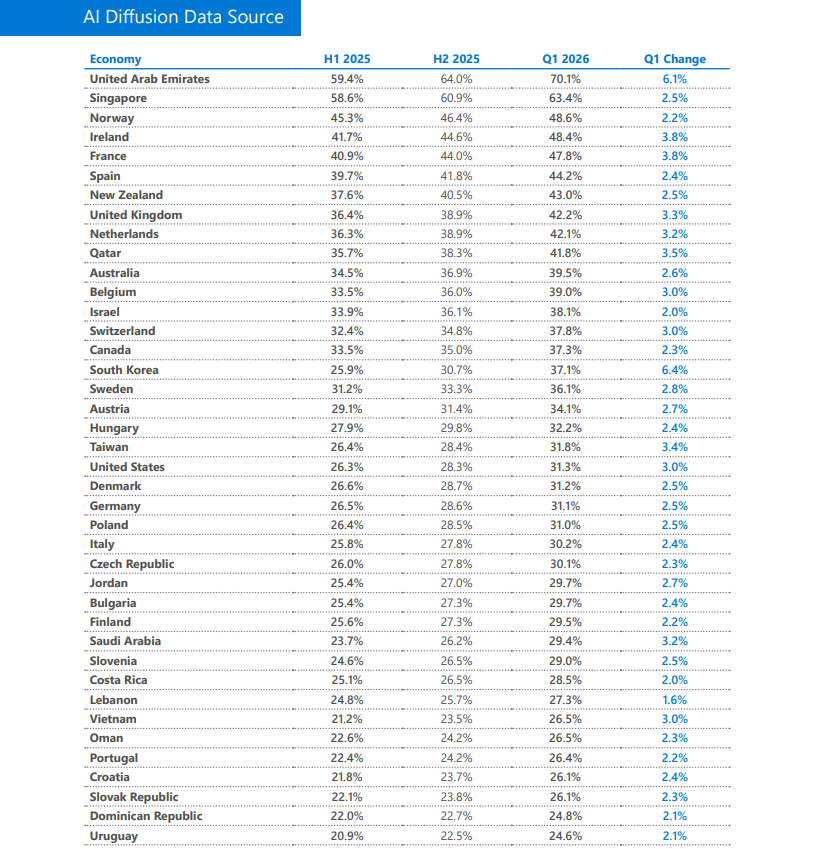
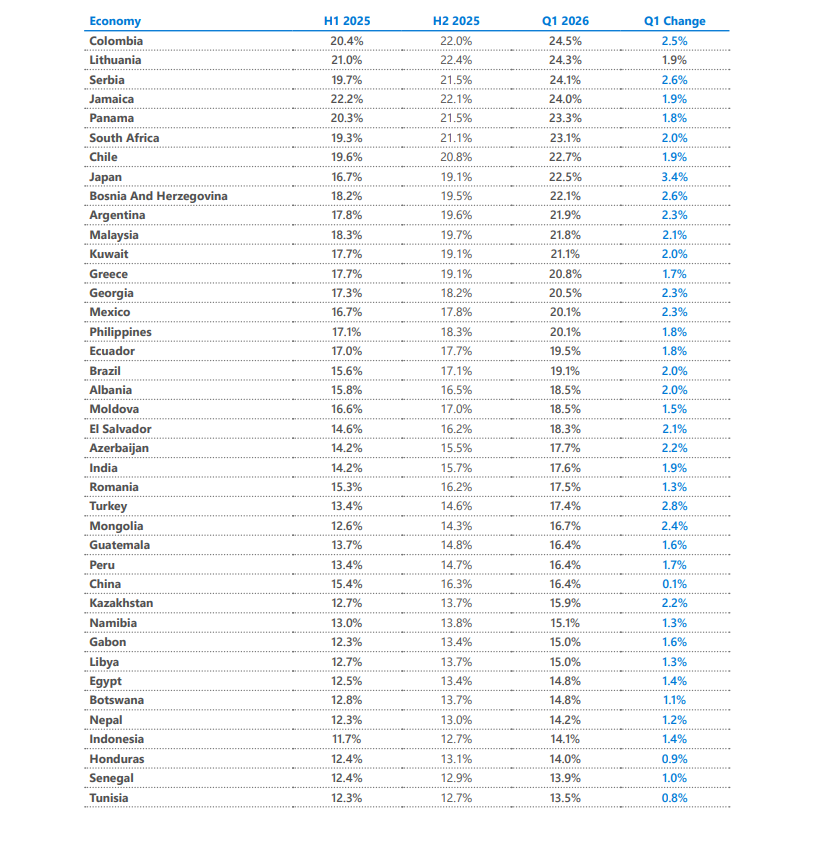
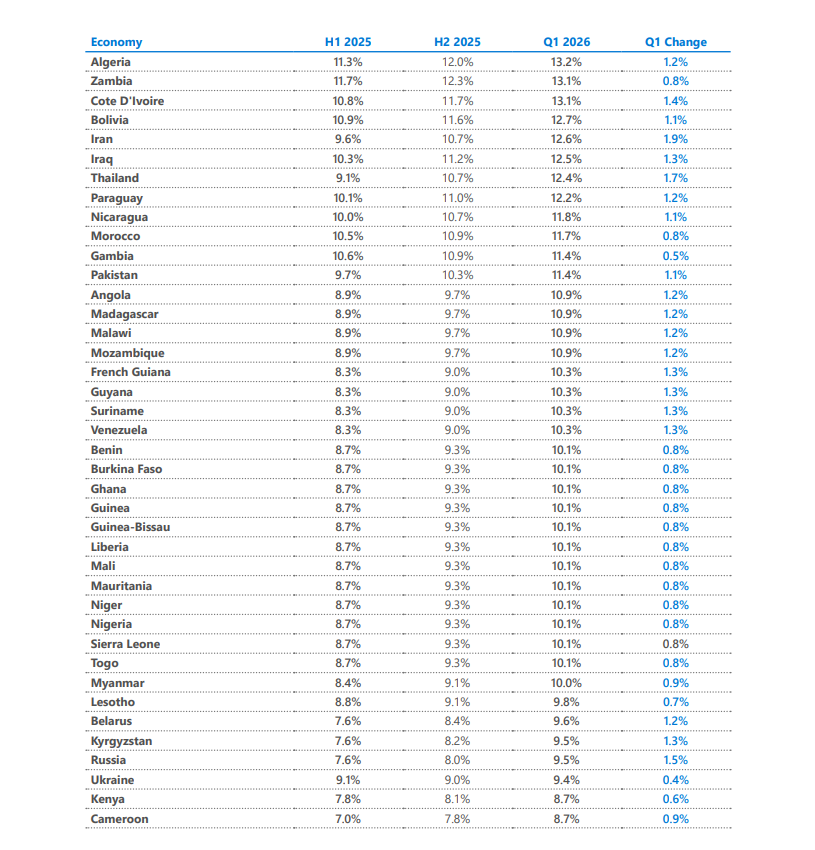
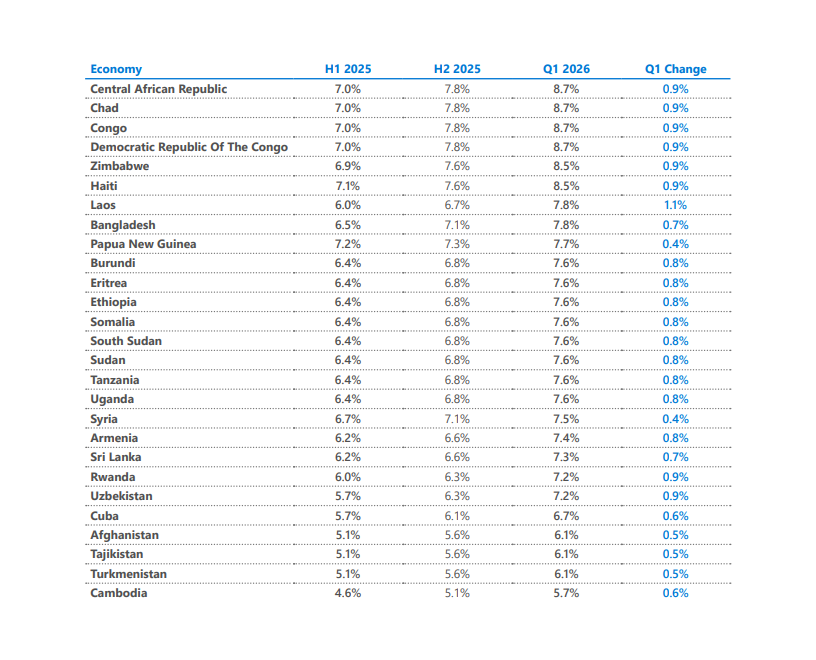
The global adoption of artificial intelligence continued to rise in the first quarter of 2026. During the quarter, AI usage increased by 1.5 percentage points from 16.3% to 17.8% of the world’s working age population. Intensity of use among economies with the highest rates of AI diffusion also increased, with 26 economies now exceeding 30% of the working age population using AI.
At the top of Microsoft’s National AI Leaderboard, the UAE continued to lead global AI diffusion at 70.1%. The United States finally started to move up the national rankings, albeit only from 24th to 21st based on a 31.3% usage rate by the working age population.
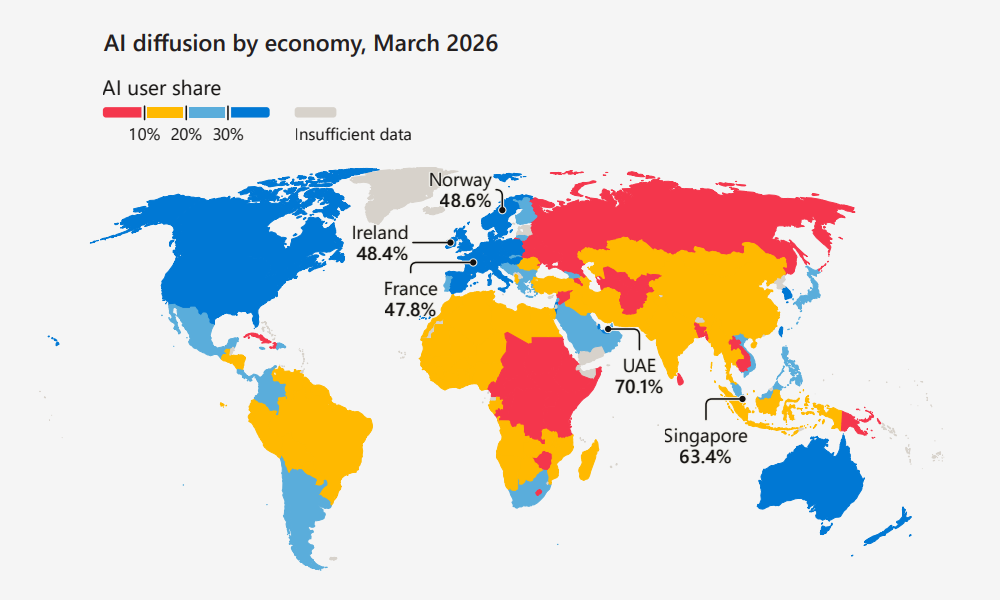
Notable developments in the quarter included accelerating AI adoption in Asia driven in part by improving AI capabilities in Asian languages. South Korea, Thailand, and Japan saw the greatest movement. More broadly, the quarter brought continued widening of the AI gap between the Global North and South, with usage now at 27.5% in the North and 15.4% in the South. These trends are discussed below, including a deeper dive on the positive impact of enhanced multilingual AI capabilities in Japan.
More details: Global AI Diffusion – Q1 2026 Trends and Insights








Banking 4.0 – „how was the experience for you”
„To be honest I think that Sinaia, your conference, is much better then Davos.”
Many more interesting quotes in the video below: